

IRS Form 433-A – What It Is and Why It Matters in Oklahoma Tax Cases
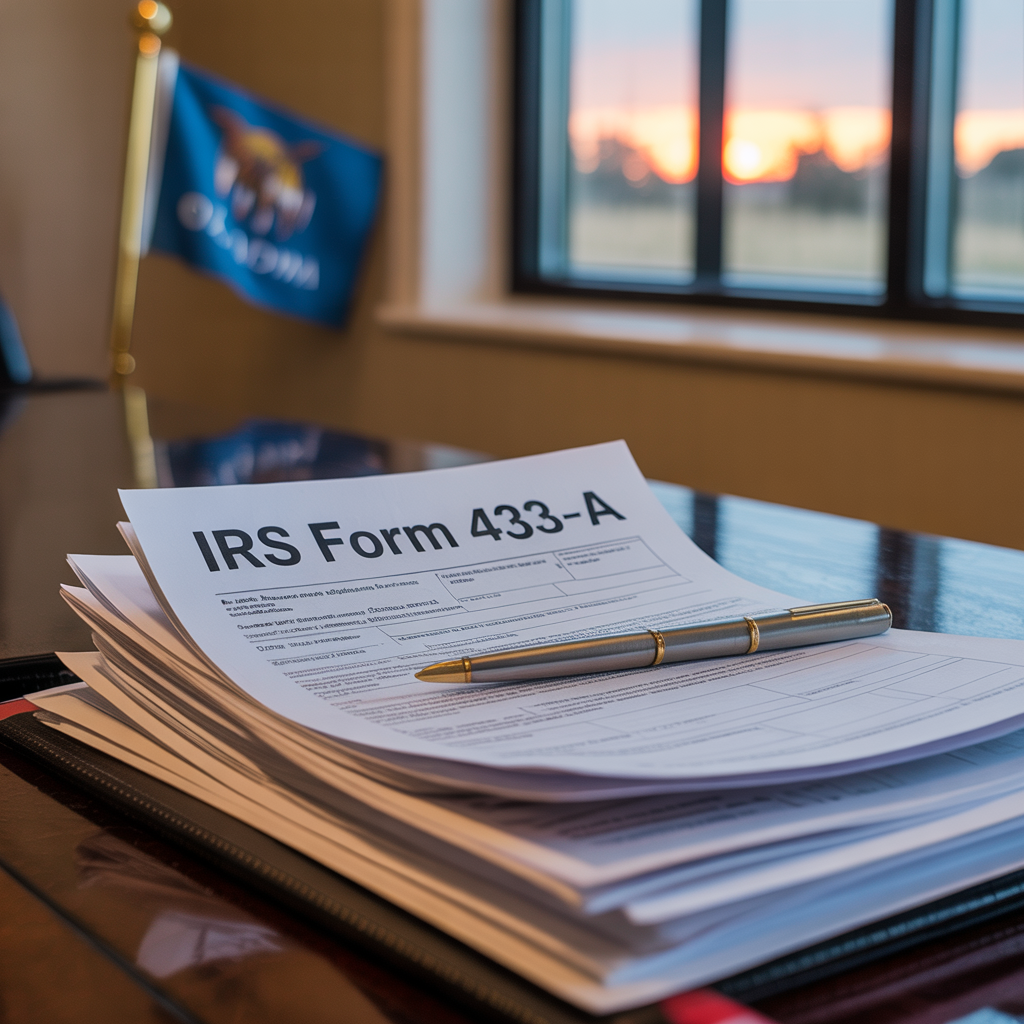
What Is IRS Form 433-A?
Form 433-A is a Collection Information Statement for Wage Earners and Self-Employed Individuals.
It is used by the IRS to:
- Evaluate your ability to pay back taxes
- Decide whether to accept an Offer in Compromise
- Determine whether a wage garnishment should be lifted
- Assess hardship (for Currently Not Collectible status)
The form includes:
- Personal info (address, family size, filing status)
- Income details (wages, self-employment, pensions, etc.)
- Monthly living expenses
- Bank accounts and investments
- Property, vehicles, and real estate
- Business asset disclosures (if self-employed)
Why It Matters So Much
The IRS uses Form 433-A to build your reasonable collection potential (RCP) — their calculation of how much they believe you can afford to pay based on:
- Net monthly income (after allowable expenses)
- Equity in assets
- Cash on hand
- Installment loan or mortgage availability
If this form is filled out incorrectly, or without strategy, the IRS may reject your Offer, deny hardship relief, or demand payments you can’t sustain.
When You’ll Be Asked to File Form 433-A
- Offer in Compromise
- Levy or garnishment release request
- Request for Currently Not Collectible status
- In-person interviews with IRS Revenue Officers
- Installment Agreement requests for debts over $50,000
Oklahoma Case Example
Client: Freelance photographer in Oklahoma City
- Owed $42,000 to the IRS from unfiled returns
- IRS assigned Revenue Officer and requested Form 433-A
- We documented actual rent, utility, and mileage costs (above national standards)
- Negotiated CNC status — no monthly payments
- Later submitted Offer in Compromise that was accepted for $6,200
Common Mistakes on IRS Form 433-A
- Overstating income or failing to deduct business expenses
- Listing assets the IRS can’t legally seize (like retirement accounts)
- Failing to claim allowable expenses above IRS standards with justification
- Omitting debts or loan obligations
- Submitting incomplete forms or unsigned documents
How Summit Tax Relief Helps
- We complete Form 433-A
accurately and strategically
- We justify expenses above IRS standards when possible
- We ensure all supporting documents are organized and attached
- We communicate directly with the IRS on your behalf
- We use Form 433-A to build the case for your settlement or hardship
Internal Links
Call to Action
IRS demanding financials? We’ll make sure you submit the right information — and nothing more than required.
📞 Call Summit Tax Relief at
(833) 477-4911
📅
Schedule Your Free Strategy Call
FAQ
What’s the difference between 433-A and 433-F?
433-F is a simplified version used by IRS call center staff. 433-A is more detailed and required by Revenue Officers and for Offers in Compromise.
Do I need to submit bank statements?
Yes — typically 3 months of statements, along with pay stubs, bills, and documentation for any unusual expenses.
Can I fill this out myself?
Yes, but most people benefit from professional help to avoid overreporting and maximize relief options.
What if I’m self-employed?
You’ll need to complete the self-employed section of the 433-A and submit a profit/loss statement.
📣 About the Author
Marc Boulanger, CPA is the founder of Summit Tax Relief LLC, a boutique tax resolution firm based in Oklahoma City, OK and trusted by high-income individuals and business owners across Oklahoma.
He is the author of Oklahoma Taxpayers' Guide: Taking A Stand Against the IRS: A Step-by-Step Plan for Dealing With Tax Collectors and Unfiled Returns Without Going Broke, available now on Amazon. The book offers a step-by-step plan for resolving IRS tax debt without losing your business, your home, or your peace of mind.
With over a decade of experience resolving high-stakes IRS and State tax matters, Marc brings strategic insight to complex cases involving wage garnishments, bank levies, unfiled returns, and six-figure tax debts. He is known for helping clients reduce or eliminate tax liabilities through expertly negotiated settlements and compliance plans.
Marc is a Certified Public Accountant licensed in California and Oklahoma and holds the designation of Certified Tax Representation Consultant. He is a member of the American Society of Tax Problem Solvers (ASTPS) — the national organization founded by the educators and practitioners who have trained thousands of CPAs, EAs, and tax attorneys in IRS representation strategy.
Every case is handled with discretion, proven methodology, and direct CPA-led representation — not call center scripts.
📍 Learn more at www.summittaxrelief.com or call (833) 477-4911.
Recent Posts

